
Dr. Rose B. Bellanca, WCC President
Thank you, Washtenaw County!
Voters approved Washtenaw Community College's operating millage renewal on Tuesday, August 4, ensuring continued investment in affordable higher education and workforce development for county residents.
"We are incredibly grateful to the voters of Washtenaw County for once again placing their trust in Washtenaw Community College and our mission. This vote is an investment in our students, our employers and the future of our community.”
August 4, 2026 Millage Renewal Proposal
Reading your primary ballot on August 4, you’ll find Washtenaw Community College’s (WCC) request for a millage renewal.
The purpose of the ballot proposal is to renew an operating millage that was previously approved by voters in 2016. On August 4, WCC is seeking to renew the millage for a 10-year period from 2027 through 2036 and restore it to 0.85 mill.
This Millage Renewal Supports All Washtenaw County Residents
Revenue generated by WCC’s millage renewal enables the college to continue educating and training the nurses who care for us, the officers who protect us, the teachers who educate our children, the skilled trades and manufacturing professionals who build and power our region, the cybersecurity specialists who safeguard our digital world and more of the professionals we all depend upon most.
The millage renewal provides essential financial support for WCC’s programs, services, information technology and cutting-edge training labs aligned with industry standards.
Renewing this millage supports:
- Generating an estimated $524 million in economic impact on Washtenaw County annually.
- Educating and training 25,000 students annually, providing everyone with the opportunity to earn a certificate, degree or new skill to enter the workforce, advance or change their career.
- Providing students with the most affordable option to complete their first two years of college before transferring to a four-year university to complete a bachelor’s degree.
- Preparing Washtenaw County’s workforce for higher-wage, in-demand careers in industries like healthcare, cybersecurity, information technology, and mobility and advanced manufacturing jobs focused on electric vehicle, battery and semiconductor technician training.
- Supporting our local and regional economy including restaurant, hotel, hospitality and retail commerce industries each summer by hosting training for five national skilled trades unions on campus – generating $23 million in annual economic impact.
For 60 years, taxpayer investment in WCC has strengthened our workforce, fueled our economy and expanded opportunities across our community.
This ballot proposal ensures that WCC is able to continue keeping up this good work for our community by providing:
All residents, families and businesses benefit from the lowest tuition in the state for higher education, training and career advancement.
- Lowest tuition: $99 per in-district credit hour – making WCC the most affordable community college in Michigan for Washtenaw County residents.
- Dollars go farther: WCC’s annual tuition averages $2,970, compared to $14,528 at public universities and $32,558 at private institutions.
- Pay less, finish faster: Dual enrollment has grown 76% in the past decade, with students earning college credit while in high school.
Our community benefits from high-caliber faculty with real-world experience and nationally recognized programs, preparing students to be job-ready and/or to transfer.
- 60 years of student achievement: Over 59,000 graduates in 60 years earning more than 89,000 degrees and certificates.
- Outstanding faculty: 90% of students rate WCC instructors as “good” or “excellent.”
- National recognition: Designated Nursing Center of Excellence, NSA Cyber Defense Center of Excellence, Gold-Level Veteran-Friendly School and U.S. Department of Labor Apprenticeship Ambassador.
- Transfer success: #1 transfer institution to the University of Michigan, with 76 transfer agreements statewide and beyond, to help students achieve job and career goals.
- Workforce training: providing everyone with the opportunity to earn a certificate, degree or new skill to help students achieve their job and career goals.
- Elite outcomes: WCC students transfer to top universities like the University of Michigan, MSU, Brown, Columbia, Harvard, Yale and leading Historically Black Colleges and Universities (HBCUs).
- Top college choice for Washtenaw County grads: More Washtenaw County high school grads enroll at WCC within a year of graduation than at any other college in Michigan.
Residents of all ages and at every stage of their careers are supported through skill development and learning opportunities, empowering them to move forward in work and life.
- Built for real lives: The average age of WCC students is 26, and approximately 70% attend part-time. WCC has flexible online and in-person course options, with day, evening and weekend schedules, helping students balance college with work and family.
- Program breadth with flexibility: WCC has more than 140 programs today – up from 22 in 1966 – including 51 offered fully online to meet students where they are to access education.
- Student Success Guarantee: WCC graduates are job- or transfer-ready – or eligible for free course retakes.
- An education superhighway: On- and off-ramps for every learner – high school students, working adults, and career changers – with approximately 10% of new students already holding a bachelor's degree or higher.
Businesses and our broader community benefit from WCC’s role in educating and training a strong pipeline of skilled talent to meet workforce needs, and drive long-term economic growth.
- $524 million estimated annual economic impact on the regional economy.
- Skilled Trades Training: Trade organization training programs generate $23 million annually in local economic impact by bringing thousands of skilled trades professionals to campus each year.
- Decades of workforce training: 74,000+ skilled trades professionals trained over 35 years across multiple trade organizations including the United Association of Plumbers and Pipefitters, the International Brotherhood of Electrical Workers, the Operational Plasterers and Cement Masons, Iron Workers and United Union of Roofers.
- Employer-driven programs: 247 industry partners serve on 17 advisory boards to keep curriculum aligned with workforce needs.
- 12,000+ nurses and nurse assistants trained.
- 1,400+ law enforcement officers trained for jobs countywide.
- High-demand pathways: Career training in advanced manufacturing, IT, cybersecurity, mobility, clean energy, healthcare and more.
- Mobility and advanced manufacturing leadership: For more than a decade, WCC has trained Michigan’s mobility workforce, expanding into EV, battery, automotive cybersecurity, and planned semiconductor cleanroom facilities.
- Turning research into results: WCC’s exclusive role in the U-M–led Center for Connected and Automated Transportation ensures programs stay aligned with emerging technologies and industry needs and prepare students for emerging higher wage, high demand professions.
- Educator pipeline leader: Premier community college partner in Talent Together, offering an affordable, earn-and-learn pathway for future teachers working in Michigan classrooms.
Families and residents benefit from lifelong learning opportunities, enriching personal growth.
- Lifelong learning: Washtenaw County seniors citizens receive low- and no-cost Emeritus Scholarships, totaling $7.7 million in free classes over time.
- Workforce and enrichment impact: Nearly 8,000 individuals enroll in personal and professional development programs annually. From children in our STEM summer camps, career starters and advancers in our professional development programs, to seniors in our Yoga classes, WCC is here for every age and stage of learner.
- Service to those who serve: WCC supports more than 500 veterans and family members annually.
- Community hub: The Morris Lawrence Building hosts over 100,000 visitors annually for education and community events, welcoming 2.1 million community members since its opening.
60 Years of Impact
This September, WCC is celebrating its 60th year of providing accessible, affordable, high-quality education.
Read about WCC's legacy from the people we serve

National Welding Champion
"Being able to finish college without any debt would be huge. That’s my main motivation
for all of this."
– Mikala Sposito | Current Student

Engineering Technician
"[My instructor] is who I want to be like when I grow up. He’s the perfect example
of being excited and staying up on technology, and he’s a lifelong learner."
– Zach Van Buren | WCC Alum
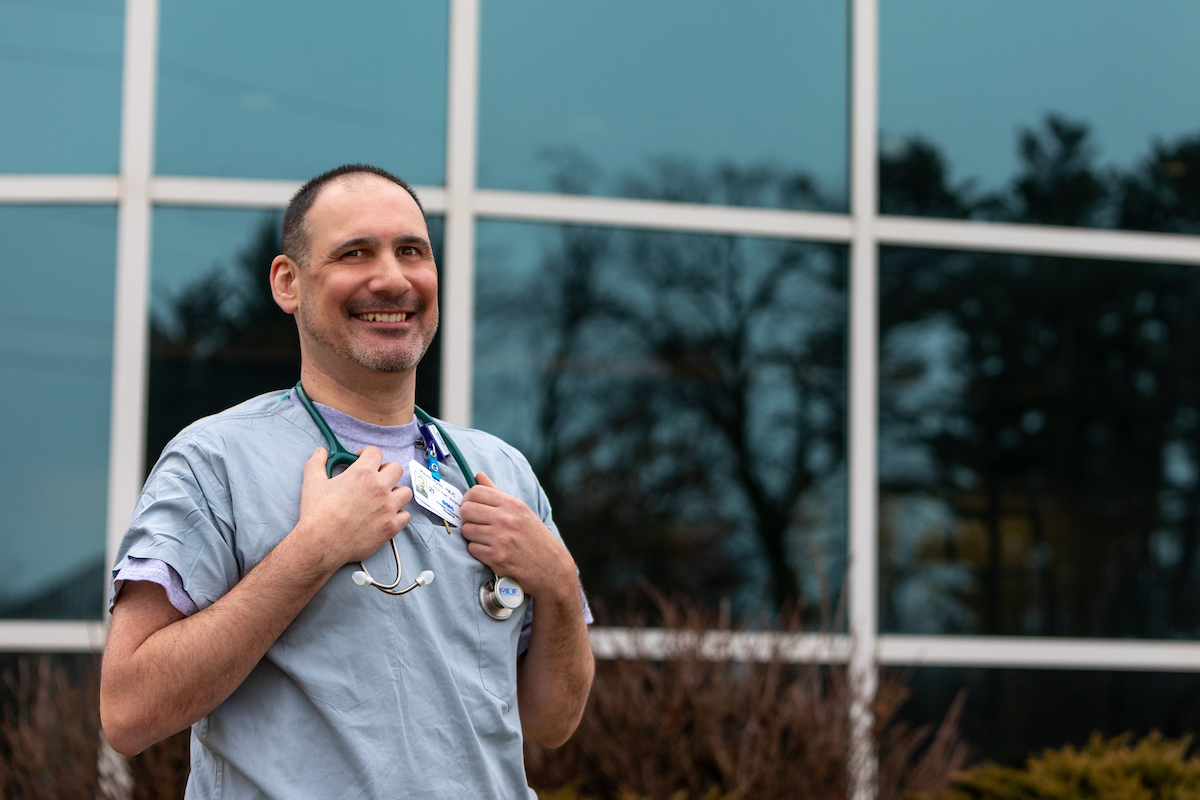
Physician Assistant
"Without WCC in the county, my family and I could not have afforded to return to school
and take so much coursework in such a short period, and so close to home."
– Kevin Ryan | WCC Alum
Read Our 60 Years of Impact Stories
Frequently Asked Questions About the Ballot Proposal
Tuesday, August 4, 2026. The polls will be open from 7 a.m. until 8 p.m.
Voters residing within the boundaries of Washtenaw County will vote on a 0.85 operating millage renewal and restoration proposal.
The primary purpose of the millage proposal is to seek voter approval of a 0.85 operating millage originally approved by voters in 2016. Revenue from this millage provides essential financial support to WCC's programs, services, information technology and cutting-edge training labs aligned with industry standards.
Voters approved a 0.85 mill tax in 2016, but state limits (the Headlee Amendment) have reduced it to 0.8109 mills over time. This proposal renews the millage and restores it to 0.85 mills in 2026. That restoration equals 0.0391 mills of the 0.85 mill tax.
The Headlee Amendment and Proposal A keep property taxes from rising faster than inflation.
In the case of WCC's millage and other millages, this means that if property values
rise faster than inflation, only a portion of the entire millage rate can be collected
until voters approve again.
This 1978 Headlee Amendment requires local governments to lower property taxes if
their aggregate property tax revenue goes up as the result of property values (and
tax assessments) rising faster than inflation, unless voters approve the previous
rate in a "Headlee rollback" election. The 1994 Proposal A amendment capped annual
increases in the assessed value of individual properties to the rate of inflation
or five percent, whichever is less.
If voters approve the 0.85 mill ballot proposal, the WCC tax rate will be the same as it was in 2016. Returning to this tax rate will require a renewal of 0.8109 mills and a restoration of 0.0391 mills. The renewal is about $85 a year or 23 cents a day for a $100,000 home in Washtenaw County.
Anyone who resides in Washtenaw County, will be 18 years of age or older on Election Day and is registered to vote can vote. Voters in Michigan can now register to vote up through and on Election Day (August 4.)
You can register to vote at any Secretary of State office or at the Clerk's Office where you reside. You can download a voter registration application at michigan.gov/vote.
You can use WCC’s TurboVote system to register to vote, request an absentee ballot and receive election reminders via text or email.
You need to update your voter registration if you have changed your name or address since the last time you voted. You can do this at any Secretary of State Office or at the Clerk's Office where you reside. More information available at michigan.gov/vote.
You will vote at your regular precinct in the community where you reside. If you are unsure of your precinct, visit michigan.gov/vote.
Yes, all eligible and registered voters in Michigan may request an absent voter ballot without providing a reason. You can download a Michigan Absent Voter Ballot Application by visiting michigan.gov/vote.
After June 26, voters can complete their absentee ballot application and vote in one stop at their Clerk's Office. The whole process takes less than five minutes.
According to the Michigan Department of the State, your completed absentee ballot must be received by your city or township clerk by 8 p.m. on Election Day. You can submit your ballot by mail in the prepaid envelope or by hand delivering it to your clerk’s office or a secure ballot drop box in your city or township. The drop box you use must be in your city or township or it may not be counted. If you are returning your ballot within two weeks of Election Day, hand-deliver it to your clerk’s office or drop box to avoid possible postal delays. As another option, you can cast your absentee ballot at your early voting site or at your polling place on Election Day.
WCC and WISD are separate, independent organizations that serve different segments of the community. WCC is a Higher Learning Commission-accredited college that serves students with an average age of 25, offering associate degrees, certificates, and pathways to transfer to four-year institutions. The Washtenaw Intermediate School District serves students from preschool through 12th grade, culminating in a high school diploma.
Need more information?
If you have questions or need more information about the election, please contact WCC at 734-677-5000.