Washtenaw Community College has reached a major milestone in its efforts to make higher
education more affordable, surpassing 100 courses that use a free Open Educational
Resource (OER) in place of a traditional textbook.
In fact, the college didn't just reach the century mark. It blew right past it.
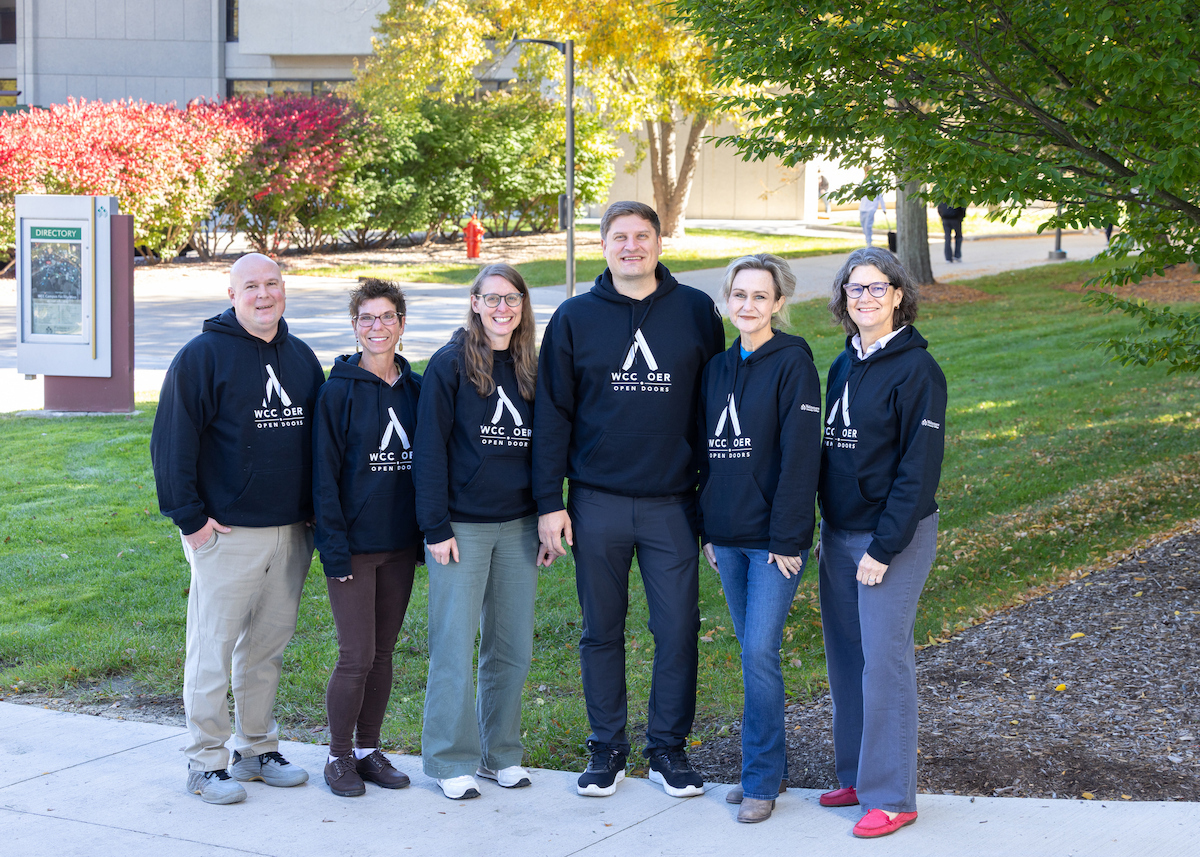
A record 18 OER projects completed during WCC's Winter 2026 faculty cohort — including 14 new projects and four revisions — brought the college's total to 108 courses using OER materials.
The newly created textbook alternatives cover classes in Business Management, Chemistry, Communication, Early Childhood Development, Economics, English, English as a Second Language, Film, Health Sciences, Humanities, Philosophy, Psychology and Sociology.
“Reaching 100 courses that use Open Educational Resources is an important milestone in our ongoing commitment to making higher education more affordable and accessible,” said Dr. Brandon R. Tucker, Executive Vice President for Instruction. “The cost of textbooks should never be a barrier to a student's success. This accomplishment reflects the dedication of our faculty to finding innovative ways to reduce financial burdens while maintaining the high-quality educational experience our students deserve.”
Nearly $20 million in savings
Since launching its OER initiative in 2017, WCC has helped students save an estimated $19.2 million in textbook costs, including $2.93 million during the 2025-26 academic year alone.
Open Educational Resources are teaching and learning materials that are freely available for students to access, use and, in many cases, download, print and retain. By replacing expensive commercial textbooks with OER, WCC helps reduce the financial burden on students while giving faculty greater flexibility to customize course content.
During the last academic year, OER courses accounted for nearly 25,000 student enrollments, each representing a potential textbook expense eliminated. Students enrolled in multiple OER courses are counted separately for each course, reflecting multiple opportunities for savings.
State grant fuels OER expansion
WCC's growing OER initiative received a significant boost through a $200,000 grant from the Michigan Department of Lifelong Education, Advancement, and Potential (MiLEAP), announced in November 2025.
“The MiLEAP grant has given us an incredible opportunity to expand our OER program and support more faculty in making high-quality course materials available to students,” said Molly Ledermann, a WCC Professional Librarian who oversees the college’s OER program. “The grant has also allowed us to support faculty in revising existing OER materials or selecting new resources, helping ensure students continue to have access to materials that are both affordable and up to date.”
Most tools developed or revised during the Winter 2026 cohort are already being used
in current classes, with more expected to be implemented next semester.
More than just textbook savings
While eliminating textbook costs is a primary benefit, OER also give students greater
flexibility in how they access and interact with learning materials.
Many of WCC's OER textbooks can be read online or downloaded as PDFs. Students can
print all or portions of the materials at relatively low cost and retain access even
after completing a course.
Faculty can also adapt and update openly licensed materials to better reflect course objectives, emerging industry developments and student needs.
---
Those interested in exploring WCC's growing collection of free textbooks and learning materials can visit Bailey Library's OER digital repository.
Tags: Affordability, November 2026, On The Record, Open Educational Resources